

CALCIUM L-THREONATE POWDER
$29.99 – $39.99Price range: $29.99 through $39.99
Calcium L-Threonate is sold for laboratory research use only. Terms of sale apply. Not for human consumption, nor medical, veterinary, or household uses. Please familiarize yourself with our Terms & Conditions prior to ordering.
- Description
- Additional information
Description
Calcium L-Threonate Nootropic Powder


| CAS Number | 70753-61-6 |
| Other Names | L-Threonic acid calcium salt, Calcium (2R,3S)-2,3,4-trihydroxybutanoate, Calcium threonate, 2,3,4-trihydroxy-(threo)-butanoic acid, ClariMem |
| IUPAC Name | Calcium;(2R,3S)-2,3,4-trihydroxybutanoate |
| Molecular Formula | C₈H₁₄CaO₁₀ |
| Molecular Weight | 310.27 |
| Purity | ≥99% Pure (LC-MS) |
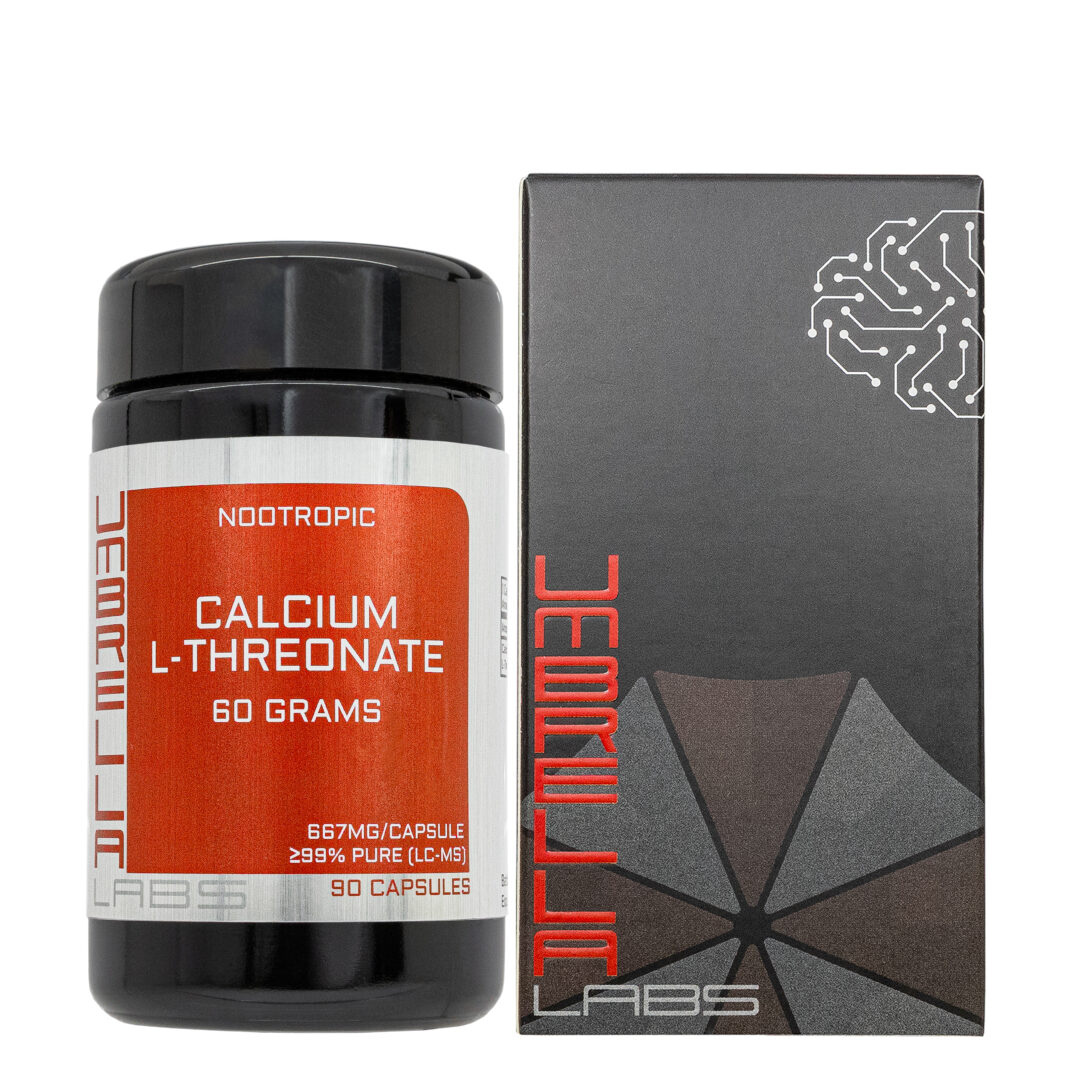
| Powder Availablity |  60 grams, 90 capsules (667mg/capsule, 60 grams total) |
| Storage | Store in cool dry environment, away from direct sunlight. |
| Certificate Of Analysis | Due to this product’s nature, this chemical does not have a COA associated with it. |
| Terms | All products are for laboratory developmental research USE ONLY. Products are not for human consumption. |
What is Calcium L-Threonate?
Calcium L-threonate is a specialized calcium salt of L-threonic acid, a naturally occurring metabolite of vitamin C, that has gained attention as a potential nootropic because of its ability to efficiently deliver calcium to the brain and support neuronal function. Unlike conventional calcium supplements that primarily target bone health, calcium L-threonate has been investigated for its effects on synaptic signaling, neuroplasticity, and cognitive performance. Calcium plays a fundamental role in neurotransmitter release, synaptic transmission, and long-term potentiation (LTP), the cellular process that underlies learning and memory. Preclinical studies suggest that calcium L-threonate may help preserve synaptic integrity, enhance communication between neurons, and improve memory and learning in models of age-related cognitive decline and neurodegenerative disease. These findings have generated interest in calcium L-threonate as a promising nutritional compound for supporting cognitive health with therapeutic potential for age-associated memory impairment and other neurological disorders.
Main Research Findings
1) The pharmacokinetic profile and safety characteristics of the nootropic were determined.
2) Administration of a mixture of calcium threonate, vitamin C, and citrus flavonoids has potential therapeutic benefits in reducing periodontal pathogens and promoting systemic health.
Selected Data
1) This clinical investigation performed by the research team of Wang et al was designed to characterize the pharmacokinetic profile and safety of calcium L-threonate following both single and repeated oral administration in healthy volunteers. The primary objectives were to determine the absorption, distribution, elimination, and urinary excretion of L-threonate after oral dosing while also evaluating dose proportionality, the effects of food on drug absorption, the potential for drug accumulation after repeated administration, and the overall tolerability of calcium L-threonate [1].
Healthy men and women between 19 and 40 years of age with body mass indices ranging from 19 to 25 kg/m² were recruited. Prior to enrollment, all volunteers underwent extensive medical screening, including physical examinations, medical history review, laboratory testing, and assessment of cardiac, hepatic, renal, pulmonary, neurological, gastrointestinal, hematological, and psychiatric health to ensure the absence of clinically significant disease. Women who were pregnant or breastfeeding were excluded, and female participants of childbearing potential were required to use reliable contraception. Additional exclusion criteria included recent participation in another clinical trial, recent blood donation, positive screening tests for hepatitis B, hepatitis C, HIV, drugs of abuse, alcohol abuse, or hypersensitivity to medications. Because L-threonate is a metabolite of vitamin C, subjects were instructed to avoid vitamin C-containing medications for one month before enrollment and throughout the study period to minimize potential interference with pharmacokinetic measurements.
The clinical trial consisted of separate single-dose and multiple-dose components. The single-dose portion employed a randomized four-period crossover design involving twelve healthy male volunteers. Each participant received four treatment conditions separated by one-week washout intervals: a single oral dose of 675 mg, 2025 mg, or 4050 mg calcium L-threonate after an overnight fast, as well as a 2025 mg dose administered within 30 minutes after breakfast to evaluate the influence of food on drug absorption. Standardized meals were provided four and ten hours after dosing. Serial blood samples were collected before dosing and at multiple time points up to forty-eight hours afterward to characterize plasma concentration-time profiles. Urine samples were collected before dosing and during several timed collection intervals over twenty-four hours to determine renal elimination [1].
The multiple-dose study enrolled fourteen healthy volunteers, equally divided between men and women. Participants received 2025 mg calcium L-threonate twice daily for four consecutive days, following an initial morning dose after overnight fasting. Serial blood samples were collected after dosing on the first and seventh study days using the same schedule as the single-dose study, while trough plasma concentrations were measured before each morning dose during repeated administration to determine when steady-state concentrations had been achieved. Subjects remained hospitalized throughout the study to ensure strict compliance with dosing schedules and dietary restrictions. Smoking, alcohol, caffeine, strenuous exercise, vitamins, herbal products, and most medications were prohibited during participation, although acetaminophen was permitted if clinically necessary [1].
Plasma and urine concentrations of L-threonate were quantified using a validated high-performance liquid chromatography-tandem mass spectrometry (HPLC-MS/MS) assay developed specifically for the study. Plasma proteins were removed by methanol precipitation, whereas urine samples were diluted before analysis. Chromatographic separation was achieved using a reverse-phase C18 column, while detection employed electrospray ionization in negative-ion mode with multiple reaction monitoring to specifically detect L-threonate. Calibration curves covering the expected concentration ranges were prepared for both plasma and urine, and quality-control samples representing low, medium, and high concentrations were analyzed alongside study samples to ensure analytical accuracy and precision.
Pharmacokinetic parameters were calculated using non-compartmental analysis with WinNonlin software. Primary variables included maximum plasma concentration (Cmax), time to maximum concentration (Tmax), elimination half-life (t½), area under the plasma concentration-time curve (AUC), apparent oral clearance (Cl/F), apparent volume of distribution (Vz/F), renal clearance, cumulative urinary excretion, steady-state average concentration, accumulation ratios, and degree of fluctuation during repeated dosing. Dose proportionality was evaluated using mixed-effects statistical models and confidence interval analysis, while paired t-tests compared pharmacokinetic differences between fasting and fed conditions. Safety was assessed throughout the study through monitoring of adverse events, clinical laboratory tests, hematology, serum chemistry, urinalysis, electrocardiograms, vital signs, and physical examinations, with investigators grading both the severity of adverse events and their relationship to treatment [1].
2) The study by Amaliya et al was designed as a prospective cohort intervention to evaluate whether daily supplementation with a combination of vitamin C, calcium L-threonate, and citrus flavonoids (VitC/Ca/Fl) could improve oral and systemic health in an Indonesian rural population with untreated periodontal disease, poor dietary habits, and limited access to regular dental care. The investigators specifically examined the effects of supplementation on plasma vitamin C concentrations, subgingival periodontal pathogens, Epstein–Barr virus (EBV), cytomegalovirus (CMV), glycated hemoglobin (HbA1c), and high-sensitivity C-reactive protein (hsCRP) [2].
The study population consisted of 98 adults who had previously participated in the long-running Java Project on Periodontal Diseases. These individuals represented a rural community characterized by chronic untreated periodontitis, poor nutrition dominated by white rice consumption, minimal fruit and vegetable intake, and restricted access to professional dental care. Previous investigations within this cohort had demonstrated that approximately one-third of participants exhibited depleted or deficient plasma vitamin C concentrations, making the population well suited for evaluating the effects of nutritional supplementation.
Following completion of baseline evaluations, participants were instructed to consume one tablet daily for 90 consecutive days. Each tablet contained 200 mg calcium ascorbate, 25 mg calcium L-threonate, and 100 mg citrus flavonoids. Subjects took the supplement immediately before their evening meal with a glass of water. To maximize adherence, investigators established small neighborhood groups consisting of six participants who selected a group leader responsible for monitoring daily supplement intake. Every thirty days participants returned their medication bottles so remaining tablets could be counted, while compliance was further supervised by an administrator familiar with the local community. [2]
An additional vitamin C absorption experiment was performed in a subgroup of 28 participants who had previously demonstrated plasma vitamin C depletion or deficiency during earlier evaluations. These individuals first underwent baseline blood sampling before receiving 60 mg of conventional ascorbic acid daily for two days. A second fasting blood sample was collected after supplementation to determine whether persistent vitamin C deficiency reflected inadequate dietary intake or impaired vitamin C absorption. After completing this short absorption assessment, these participants entered the same ninety-day VitC/Ca/Fl supplementation protocol as the remainder of the cohort [2].
Comprehensive biological measurements were obtained before and after supplementation. Fasting venous blood samples were collected to determine plasma vitamin C, HbA1c, high-sensitivity C-reactive protein (hsCRP), and serological evidence of viral infection. Plasma intended for vitamin C analysis was processed immediately to minimize oxidation before measurement by high-performance liquid chromatography (HPLC). HbA1c concentrations were quantified using an automated Cobas c501 immunoassay analyzer and categorized according to American Diabetes Association criteria into normal, prediabetic, and diabetic ranges. Serum hsCRP concentrations were measured using high-sensitivity immunoassays and classified into low-, intermediate-, or high-risk cardiovascular categories. These laboratory measurements enabled investigators to evaluate nutritional status, glucose metabolism, and systemic inflammation before and after supplementation.
Microbiological analyses focused on four previously identified periodontal lesions from each participant. After removal of supragingival plaque, sterile paper points were inserted into periodontal pockets to obtain pooled subgingival plaque samples. Separate samples were collected for bacterial and viral analyses. Bacterial DNA was extracted and quantified using real-time quantitative polymerase chain reaction (qPCR) to measure seven established periodontal pathogens: Aggregatibacter actinomycetemcomitans, Porphyromonas gingivalis, Prevotella intermedia, Tannerella forsythia, Fusobacterium nucleatum, Parvimonas micra, and Treponema denticola. Viral DNA analysis similarly employed PCR methods to detect Epstein–Barr virus (EBV) and cytomegalovirus (CMV). Laboratory personnel remained blinded to whether samples originated from baseline or follow-up examinations throughout microbial analyses [2].
Continuous variables, including plasma biomarkers and microbial counts, were compared before and after supplementation using paired t-tests or Wilcoxon signed-rank tests when appropriate. Changes in microbial prevalence were analyzed using McNemar tests, while subgroup comparisons employed analysis of variance or Kruskal–Wallis tests. Chi-square analyses evaluated shifts among vitamin C, HbA1c, and hsCRP classification categories following supplementation, with Bonferroni corrections applied for multiple comparisons. Overall, investigators determined whether ninety days of combined vitamin C, calcium L-threonate, and citrus flavonoid supplementation produced measurable improvements in oral microbial composition, nutritional status, inflammatory markers, and metabolic health [2].
Discussion
1) The study conducted by Wang et al demonstrated that calcium L-threonate was rapidly absorbed, well tolerated, and exhibited favorable pharmacokinetic characteristics following both single and multiple oral administrations in healthy volunteers. Twenty-six healthy participants completed the Phase I trial, including twelve subjects in the single-dose crossover study and fourteen volunteers enrolled in the multiple-dose study. Although two participants withdrew from the multiple-dose portion for personal reasons, no withdrawals were attributed to treatment-related adverse events. Baseline demographic characteristics, including age, height, weight, and body mass index, were comparable among participants, minimizing the likelihood that differences in pharmacokinetic outcomes resulted from subject characteristics rather than the study intervention [1].
Following single oral administration, plasma concentrations of L-threonate increased rapidly, with median Tmax occurring approximately 2 hours after dosing across all dose levels. After reaching peak concentrations, plasma levels declined quickly, with an average elimination half-life of approximately 2.5 hours, indicating rapid clearance from the circulation. Increasing the dose from 675 mg to 4050 mg produced corresponding increases in both Cmax and overall systemic exposure measured by the AUC. Mean Cmax increased from 15.5 mg/L at the 675 mg dose to 42.8 mg/L at the 4050 mg dose, while mean AUC increased from 77.7 h·mg/L to 220.9 h·mg/L over the same dosing range. However, statistical analysis demonstrated that these increases were not dose proportional, indicating nonlinear pharmacokinetics across the investigated dose range. Confidence interval analysis of dose-normalized Cmax and AUC values fell outside the predefined criteria for dose proportionality, suggesting that absorption became less efficient as the administered dose increased, possibly because of saturation of intestinal absorption mechanisms [1].

Figure 1: Cmax in subjects following a single dose of L-threonate at varying treatment doses.
The investigators also examined the influence of food intake on L-threonate absorption by comparing pharmacokinetic parameters following administration of a 2025 mg dose under fasting and fed conditions. Administration after breakfast significantly enhanced systemic exposure. Mean Cmax increased from 32.3 mg/L under fasting conditions to 39.1 mg/L after food consumption, while mean AUC increased from 152.9 h·mg/L to 203.6 h·mg/L. These differences reached statistical significance, demonstrating that food improved the absorption of calcium L-threonate. The plasma concentration-time curves further illustrated higher and more sustained plasma concentrations following administration with food, leading the investigators to conclude that oral bioavailability is enhanced in the fed state.
Urinary excretion studies revealed that renal elimination represented only a minor route of drug disposal. Following single-dose administration, cumulative urinary excretion during the first twenty-four hours accounted for approximately 10.3%, 4.2%, and 3.3% of the administered dose after the 675 mg, 2025 mg, and 4050 mg treatments, respectively. Average renal clearance remained low, approximately 0.8 L/h, indicating that only a small proportion of absorbed L-threonate was eliminated unchanged through the kidneys. Because extensive urinary excretion was not observed and no phase II metabolites were detected during additional mass spectrometric screening, the investigators proposed that L-threonate may instead undergo metabolic incorporation into endogenous biochemical pathways rather than extensive renal elimination, although they acknowledged that its metabolic fate remained incompletely understood [1].
The multiple-dose study demonstrated that repeated administration of 2025 mg twice daily for four days did not produce clinically significant drug accumulation. Plasma trough concentrations stabilized before the final pharmacokinetic assessment, confirming that steady state had been achieved by the seventh study day. The elimination half-life during repeated dosing averaged approximately 2.1 hours, nearly identical to that observed after single-dose administration, indicating that repeated exposure did not alter elimination kinetics. Accumulation ratios calculated from both AUC and Cmax were close to unity at 1.086 and 1.102, respectively, confirming the absence of meaningful systemic accumulation despite twice-daily dosing. Although plasma exposure during the multiple-dose study appeared modestly higher than during the fasting single-dose study, additional statistical analyses demonstrated that these differences reflected normal interindividual variability and study-period effects rather than gender differences or cumulative drug accumulation.
Safety analyses demonstrated an excellent tolerability profile for calcium L-threonate across all dose levels. No serious adverse events occurred throughout either phase of the study. No clinically meaningful abnormalities were detected in hematology, serum chemistry, liver function tests, urinalysis, electrocardiograms, physical examinations, or vital signs after treatment. Overall, the investigators concluded that calcium L-threonate is rapidly absorbed, exhibits nonlinear but predictable pharmacokinetics, demonstrates improved absorption when taken with food, undergoes minimal renal elimination, does not accumulate following repeated dosing, and is safe and well tolerated in healthy adult volunteers over the evaluated dosing range. These findings supported continued clinical development of calcium L-threonate as a potential therapeutic agent and calcium supplement [1].
2) The study performed by researchers Amaliya et al demonstrated that 90 days of daily supplementation with vitamin C, calcium L-threonate, and citrus flavonoids (VitC/Ca/Fl) produced substantial improvements in nutritional status, periodontal microbiology, systemic inflammation, and markers of glucose metabolism in a rural Indonesian population with untreated periodontitis and poor dietary habits. One of the most striking findings was the marked increase in plasma vitamin C concentrations. Before supplementation, the mean plasma vitamin C concentration was 5.19 mg/L, and 44 of the 98 participants (45%) exhibited depleted or deficient vitamin C levels below 4.0 mg/L. Following the supplementation period, every participant achieved plasma vitamin C concentrations above the deficiency threshold, with the mean concentration increasing to 12.13 mg/L, representing a highly significant improvement. Moreover, the number of participants with optimal vitamin C concentrations of ≥8.8 mg/L increased dramatically from 13 individuals at baseline to 83 participants after treatment. Subjects who initially exhibited vitamin C depletion or deficiency experienced the greatest improvements, although individuals with normal baseline vitamin C levels also demonstrated significant increases. Despite this overall success, plasma vitamin C concentrations varied considerably among participants after supplementation, suggesting differences in individual absorption or metabolism [2].
Evaluation of the subgingival microbiota revealed substantial reductions in the quantity of every periodontal pathogen examined. At baseline, nearly every participant harbored the major periodontal pathogens, with more than 97% testing positive for Porphyromonas gingivalis, Prevotella intermedia, Tannerella forsythia, Fusobacterium nucleatum, Parvimonas micra, and Treponema denticola, while approximately 48% carried Aggregatibacter actinomycetemcomitans. Although the prevalence of these bacteria remained largely unchanged after supplementation, their bacterial loads declined significantly across all species. The most pronounced reduction occurred for P. gingivalis, whose average bacterial count decreased, representing nearly a 70% reduction. Significant decreases were also observed for A. actinomycetemcomitans, P. intermedia, T. forsythia, P. micra, F. nucleatum, and T. denticola. These findings indicated that although supplementation did not eliminate periodontal pathogens, it substantially reduced their abundance within periodontal pockets. Importantly, comparable microbial improvements were observed in participants regardless of whether they had normal or deficient vitamin C levels before supplementation, suggesting that the intervention exerted beneficial effects across the entire study population.
Viral analyses demonstrated similarly encouraging findings. Cytomegalovirus (CMV) was absent in virtually all participants both before and after treatment and therefore showed no meaningful change. In contrast, EBV was highly prevalent at baseline, being detected in approximately 73–75% of participants. After ninety days of supplementation, EBV prevalence declined to approximately 35% of subjects, accompanied by a highly significant reduction in viral copy numbers. These results suggested that nutritional supplementation may have favorably influenced both bacterial and viral components of the subgingival microbial environment [2].
The intervention also produced important improvements in metabolic health. Mean HbA1c values decreased significantly from 5.96% with 42 mmol/mol, at baseline to 5.71% at 39 mmol/mol, after supplementation. Every participant experienced some reduction in HbA1c, although the greatest improvements occurred among individuals with impaired glucose regulation before treatment. Participants classified as prediabetic demonstrated larger reductions than those with normal baseline HbA1c, while subjects meeting diabetic criteria experienced the largest absolute improvements. Consequently, the proportion of participants with normal glycemic status increased from 23.5% to 55%, whereas the prevalence of prediabetes declined from 70.5% to 43%, and the proportion classified as diabetic decreased from 6% to only 2% following supplementation. These findings indicated meaningful improvements in long-term glucose regulation across the study population [2].
Systemic inflammatory status improved in parallel with the metabolic changes. Mean hsCRP concentrations decreased from 2.16 mg/L before supplementation to 0.94 mg/L afterward. Participants with the highest baseline hsCRP values experienced the largest reductions, while individuals with initially low inflammatory marker levels showed smaller but still statistically significant improvements. As a result, the percentage of participants classified as having low cardiovascular inflammatory risk increased from 46% before treatment to 70% after supplementation, whereas the proportion of subjects categorized as high risk declined from 21% to only 5%. These reductions suggested that the nutritional intervention substantially decreased systemic inflammation in this chronically inflamed population.
The separate vitamin C absorption experiment provided additional insight into interindividual variability in vitamin C metabolism. Among the 28 participants previously identified as vitamin C deficient or depleted, two days of supplementation with 60 mg of conventional vitamin C significantly increased plasma vitamin C concentrations from 4.91 mg/L to 7.93 mg/L. However, six participants remained deficient or depleted despite supplementation, suggesting reduced vitamin C absorption or utilization in a subset of the population. Overall, the investigators concluded that combined supplementation with vitamin C, calcium L-threonate, and citrus flavonoids markedly improved vitamin C status, substantially reduced the burden of periodontal pathogens and Epstein–Barr virus, lowered systemic inflammation and HbA1c concentrations, and may represent a simple nutritional strategy for improving both periodontal and systemic health in underserved populations with poor dietary intake and untreated periodontitis [2].
Disclaimer
**LAB USE ONLY**
*This information is for educational purposes only and does not constitute medical advice. THE PRODUCTS DESCRIBED HEREIN ARE FOR RESEARCH USE ONLY. All clinical research must be conducted with oversight from the appropriate Institutional Review Board (IRB). All preclinical research must be conducted with oversight from the appropriate Institutional Animal Care and Use Committee (IACUC) following the guidelines of the Animal Welfare Act (AWA).
Citations
[1] Wang HY, Hu P, Jiang J. Pharmacokinetics and safety of calcium L-threonate in healthy volunteers after single and multiple oral administrations. Acta Pharmacol Sin. 2011;32(12):1555-1560. doi:10.1038/aps.2011.138
[2] Amaliya A, Laine ML, Loos BG, Van der Velden U. Java project on periodontal diseases: effect of vitamin C/calcium threonate/citrus flavonoids supplementation on periodontal pathogens, CRP and HbA1c. J Clin Periodontol. 2015;42(12):1097-1104. doi:10.1111/jcpe.12478
Calcium L-Threonate is sold for laboratory research use only. Terms of sale apply. Not for human consumption, nor medical, veterinary, or household uses. Please familiarize yourself with our Terms & Conditions prior to ordering.


Additional information
| Weight | N/A |
|---|---|
| Dimensions | N/A |
| Options |