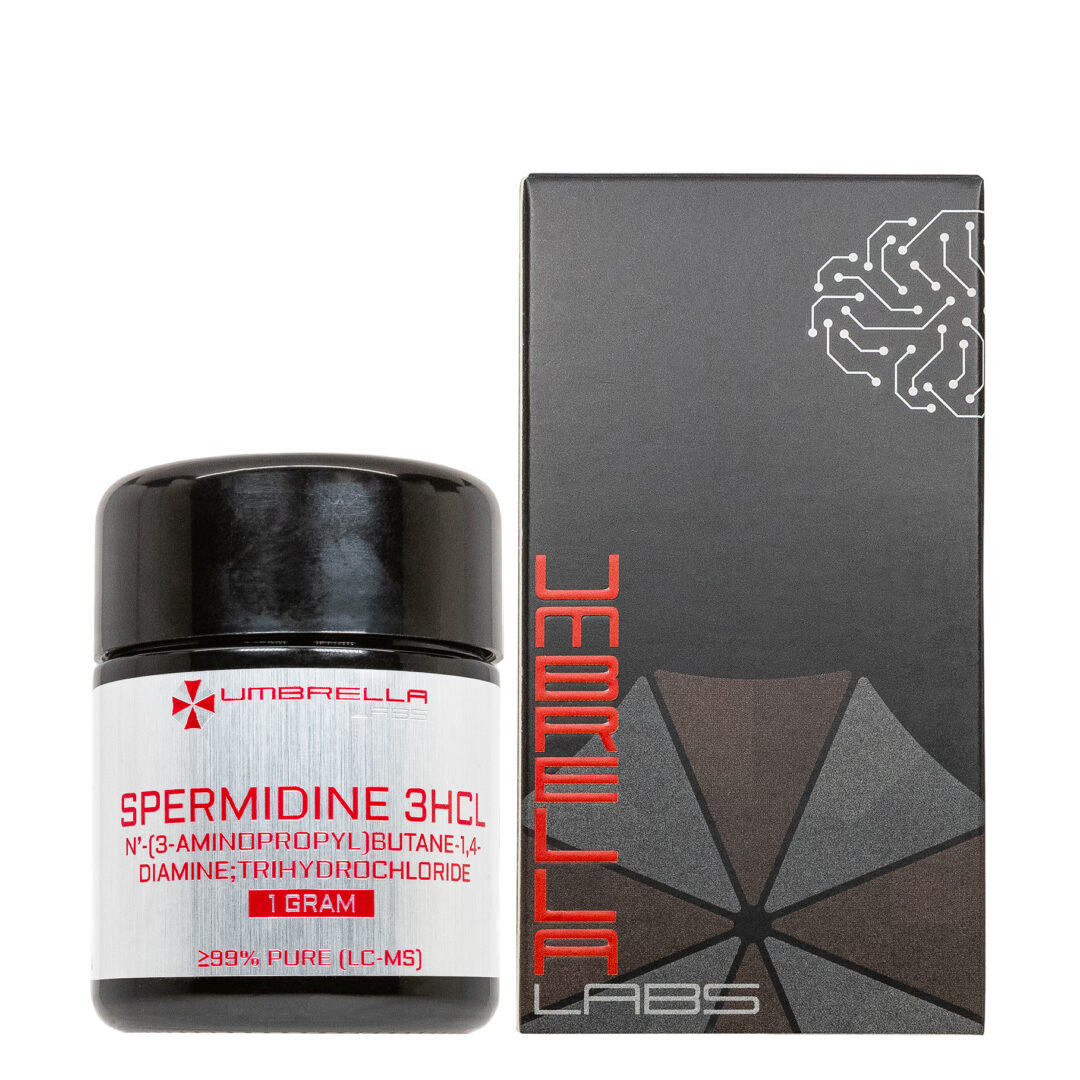


SPERMIDINE 3HCL POWDER (1 GRAM)
$25.99
Spermidine 3HCL is sold for laboratory research use only. Terms of sale apply. Not for human consumption, nor medical, veterinary, or household uses. Please familiarize yourself with our Terms & Conditions prior to ordering.


Also Available In:
 Capsule Option >> Liquid Option >>
- Description
- Additional information
Description
Spermidine 3HCl Nootropic Powder


| CAS Number | 334-50-9 |
| Other Names | 334-50-9, Spermidine Hydrochloride, N1-(3-Aminopropyl)butane-1,4-diamine trihydrochloride |
| IUPAC Name | N’-(3-aminopropyl)butane-1,4-diamine;trihydrochloride |
| Molecular Formula | C₇H₂₂Cl₃N₃ |
| Molecular Weight | 254.63 |
| Purity | ≥99% Pure (LC-MS) |
| Liquid Availability | 30mL liquid (20mg/mL, 600mg bottle) |
| Powder Availability | 60 capsules (10mg/capsule, 600mg total)
|
| Storage | Store in cool dry environment, away from direct sunlight. |
| Terms | All products are for laboratory developmental research USE ONLY. Products are not for human consumption. |
What is Spermidine 3HCl?
Spermidine is a naturally occurring polyamine compound that has gained attention as a potential nootropic due to its involvement in cellular maintenance, longevity pathways, and neuroprotection. Found in various foods and produced naturally within the body, spermidine plays an important role in regulating cellular growth, mitochondrial function, and autophagy, the process by which cells remove damaged components and maintain optimal function. Increased autophagic activity has been associated with improved neuronal health, reduced oxidative stress, and protection against age-related cognitive decline. Research suggests that spermidine may support brain function by influencing inflammation, synaptic plasticity, and mechanisms related to learning and memory. Preclinical studies have shown promising effects on lifespan extension and cognitive resilience.
Main Research Findings
1) Spermidine was found to have the potential to treat and prevent age-associated memory and cognitive decline.
2) In a model of diet-induced obese mice, spermidine was found to improve the function of gut microbiota and improve the integrity of the gut barrier.
Selected Data
1) The review article completed by researchers Zou et al examined existing scientific evidence to evaluate how the naturally occurring polyamine spermidine influences aging-associated memory decline and cognitive impairment. The researchers organized current knowledge surrounding spermidine by reviewing its biological sources, metabolic regulation, age-related changes, therapeutic potential, and molecular mechanisms responsible for its effects on cognition. The overall objective was to determine whether restoring spermidine availability through diet, supplementation, microbiome modification, or metabolic regulation could represent a potential approach for maintaining brain function during aging [1].
The authors first examined research describing spermidine metabolism, including how the molecule is obtained, produced, distributed, and broken down within the body. Evidence from nutritional studies, microbiome research, and biochemical investigations was reviewed to explain that spermidine originates from three major sources: dietary intake, production by intestinal microorganisms, and internal biosynthesis within mammalian cells. The review analyzed studies investigating spermidine-rich foods such as wheat germ, soybeans, and certain animal-derived products, as well as dietary patterns such as the Mediterranean diet that contain relatively high levels of polyamines. The authors also examined research on gut microbiota contributions to polyamine production, emphasizing that intestinal bacteria can generate precursors such as putrescine, which can later be converted into spermidine and spermine. The review incorporated metabolic pathway studies describing the enzymatic conversion of arginine into ornithine, putrescine, spermidine, and spermine through enzymes such as ornithine decarboxylase, spermidine synthase, and spermine synthase. Spermidine availability depends on diet, microbial activity, cellular synthesis, and catabolism.
The review also evaluated studies measuring spermidine concentrations under aging and disease conditions. The research team compared research analyzing serum, urine, and brain tissue polyamine levels in healthy individuals and patients with aging-associated cognitive disorders, including mild cognitive impairment and Alzheimer’s disease. These studies were included to determine whether altered spermidine metabolism is associated with cognitive decline. Because some investigations reported decreased spermidine levels in aging and neurodegenerative conditions while others found elevated levels in certain disease states, the authors compared different interpretations of these findings. They considered that increased spermidine concentrations observed in some disorders may represent a compensatory response to disease progression rather than a direct cause of pathology [1].
To assess the therapeutic potential of spermidine, the researchers reviewed human clinical studies and epidemiological investigations examining relationships between spermidine intake and cognitive outcomes. These included population-based studies analyzing dietary spermidine consumption, brain structure measurements, dementia risk, and cognitive performance assessments. Randomized clinical trials using spermidine-rich plant extracts were also examined to evaluate whether supplementation improved memory performance in older adults, individuals with subjective cognitive decline, and patients with mild or moderate dementia. The authors compared differences between intervention lengths, spermidine doses, participant groups, and measured outcomes to determine the consistency of cognitive benefits reported across studies.
In addition to human evidence, the review summarized experimental approaches using multiple aging and neurodegenerative disease models. Animal studies involving mice, rats, fruit flies, and nematodes were analyzed because these models allow researchers to examine molecular mechanisms that cannot easily be studied in humans. The authors reviewed experiments investigating whether spermidine supplementation improved learning and memory behaviors while altering biological processes associated with aging. Particular attention was given to studies measuring autophagy, a cellular recycling pathway that removes damaged proteins and organelles. The review included findings from genetic models where autophagy-related genes were altered, allowing researchers to determine whether autophagy activation was necessary for spermidine-mediated cognitive improvements [1].
The authors further reviewed mechanistic studies investigating how spermidine affects mitochondria, synaptic communication, neuronal development, oxidative stress, inflammation, and vascular function. Mitochondrial studies were evaluated by examining research on mitochondrial structure, energy production, mitophagy, and proteins involved in mitochondrial regulation. The review also analyzed studies measuring synaptic plasticity through changes in neurotransmitter receptors, particularly NMDA and AMPA receptors, which are essential for learning and memory formation. Additional cellular studies involving neuronal cultures and immune cells were reviewed to understand how spermidine affects neuronal growth, inflammatory signaling pathways, and oxidative damage. Overall, the authors used evidence from diverse biological systems to create a broad mechanistic explanation of how spermidine may preserve cognitive function during aging. The review concluded by identifying current limitations in the field, including uncertainty surrounding ideal supplementation doses, long-term safety, and differences between animal findings and human clinical outcomes [1].
2) The study conducted by the research team of Ma et al investigated the effects of spermidine supplementation on obesity-associated metabolic dysfunction, intestinal barrier impairment, inflammation, and gut microbiota alterations. The researchers designed a comprehensive experimental approach involving human dietary data analysis, multiple mouse models, microbiome sequencing, biochemical measurements, molecular analyses, and cellular experiments to determine the mechanisms by which spermidine influences metabolic health. Since spermidine is a naturally occurring polyamine obtained from dietary sources and produced by intestinal microorganisms, the authors examined whether changes in spermidine availability could influence obesity development and related complications [2].
The first component of the study involved an analysis of human clinical and dietary data obtained from the National Health and Nutrition Examination Survey (NHANES) database. Information from 5,799 individuals was collected, and spermidine intake was estimated using dietary information combined with a previously established polyamine content database. The researchers focused specifically on 1,908 participants without diabetes to examine associations between daily spermidine intake and metabolic indicators such as body mass index (BMI), waist circumference, fasting glucose, fasting insulin, hemoglobin A1c (HbA1c), and the homeostatic model assessment of insulin resistance (HOMA-IR). Statistical correlations were performed using Pearson correlation analysis to determine whether natural dietary spermidine intake was related to obesity-associated metabolic parameters [2].
To investigate the effects of spermidine experimentally, the researchers used eight-week-old male C57BL/6J mice. The mice were separated into dietary groups and maintained for sixteen weeks under different feeding conditions. One group received a normal chow diet, while another group received a high-fat diet designed to induce obesity and metabolic dysfunction. Additional high-fat diet groups were supplemented with different doses of spermidine through drinking water, allowing the researchers to determine whether spermidine administration could reverse or prevent diet-induced obesity effects. Body weight, food intake, and water intake were regularly monitored throughout the experiment. After treatment, metabolic tissues including liver, adipose tissue, intestine, and fecal samples were collected for further analysis.
Several metabolic assessments were performed to evaluate the impact of spermidine on obesity-related complications. Body composition was examined by measuring fat accumulation, and tissue samples from the liver and epididymal white adipose tissue were evaluated using histological staining techniques. Hematoxylin and eosin (H&E) staining was used to examine tissue structure, liver lipid accumulation, and adipocyte size. Glucose metabolism was measured through glucose tolerance tests and insulin tolerance tests, while circulating glucose, insulin levels, and HOMA-IR calculations were used to determine insulin sensitivity. Inflammation within metabolic tissues was examined by measuring macrophage accumulation using F4/80 staining and evaluating inflammatory signaling pathways, including NF-κB activation.
Because the researchers hypothesized that spermidine affected obesity through improvements in intestinal health, extensive analyses of gut barrier function were performed. Colon length was measured as an indicator of intestinal health, and intestinal permeability was assessed using fluorescein isothiocyanate (FITC)-dextran testing, which measures the movement of molecules across the intestinal barrier. Plasma lipopolysaccharide (LPS) levels were also measured because increased circulating LPS indicates bacterial product leakage from the gut and contributes to systemic inflammation. Additional intestinal assessments included staining methods to measure mucus-producing goblet cells and mucin secretion, which are important components of the protective intestinal barrier. [2]
To determine the molecular pathways affected by spermidine, the researchers performed transcriptomic and protein analyses on intestinal tissues. RNA sequencing was used to identify changes in gene expression caused by high-fat feeding and spermidine treatment. The analysis focused on pathways associated with epithelial function, inflammation, lipid metabolism, and autophagy. Quantitative PCR was used to confirm changes in genes related to autophagy, tight junction proteins, mucin production, and inflammatory responses. Western blot analyses measured proteins involved in intestinal barrier function, including Claudin-1 and Occludin, as well as autophagy-related proteins such as LC3B and Beclin-1. Apoptosis-related proteins, including Bax, Bcl2, and Caspase-3, were also examined to determine whether spermidine protected intestinal cells from damage.
Additional experiments were performed using Caco-2 intestinal epithelial cells to investigate cellular mechanisms. These cells were treated with spermidine to determine its direct effects on intestinal barrier proteins, autophagy activity, and inflammatory signaling. Researchers also examined whether spermidine acted through Toll-like receptor 4 (TLR4), a receptor involved in detecting bacterial LPS and activating inflammation. Experiments using TLR4 knockout mice and pharmacological TLR4 inhibition helped determine whether suppression of this pathway contributed to spermidine’s protective effects [2].
The study also explored the relationship between spermidine and the gut microbiome. Cecal microbiota samples were analyzed using high-throughput 16S rRNA sequencing to determine bacterial composition and diversity. Bioinformatic analysis identified changes in bacterial populations caused by obesity and spermidine supplementation. To determine whether gut bacteria were required for spermidine’s effects, researchers used antibiotic treatment to deplete intestinal microbiota. They also performed fecal microbiota transplantation (FMT), transferring microbiota from spermidine-treated mice into obese mice to evaluate whether altered bacterial communities alone could improve metabolic outcomes. Finally, short-chain fatty acid (SCFA) concentrations were measured because these bacterial metabolites are important regulators of intestinal barrier function and metabolism. Together, these methods allowed the researchers to examine spermidine’s effects at the organism, tissue, cellular, and microbial levels [2].
Discussion
1) The review article completed by researchers Zou et al summarized evidence demonstrating that spermidine has significant potential to protect against age-related cognitive decline through several interconnected biological mechanisms, including restoration of autophagy, preservation of mitochondrial function, maintenance of synaptic activity, reduction of oxidative stress and inflammation, and promotion of neuronal health. The authors concluded that declining spermidine availability during aging may contribute to impaired cellular maintenance and neurological dysfunction, while restoring spermidine levels through dietary intake, supplementation, or regulation of metabolism may improve memory and cognitive performance. Evidence from human observational studies, clinical trials, and experimental models suggests that spermidine influences several of the major pathways associated with brain aging and neurodegenerative disorders [1].
One major finding discussed in the review was that spermidine metabolism changes significantly with aging and cognitive disorders. Research has shown that polyamine concentrations, including spermidine, often decline as organisms age, and this decrease may reduce the brain’s ability to maintain normal cellular function. Several human studies reported that serum, urinary, and brain spermidine levels are altered in individuals experiencing memory decline, mild cognitive impairment (MCI), and Alzheimer’s disease (AD). Some investigations found lower spermidine levels in patients with cognitive impairment compared with healthy individuals, suggesting that reduced spermidine availability may contribute to disease progression. However, other studies reported elevated spermidine concentrations in certain Alzheimer’s disease patients, which the authors suggested may represent a compensatory response to neuronal damage rather than a direct cause of disease. These differences indicate that spermidine regulation is complex and may vary depending on disease stage, severity, and individual metabolic differences [1].
The review found strong evidence supporting the ability of spermidine supplementation to improve memory and cognitive function. Human population studies showed that higher dietary spermidine intake was associated with better cognitive performance and reduced risk of cognitive decline. Study findings suggested that individuals consuming diets naturally higher in spermidine displayed improved cognitive outcomes. Other research demonstrated that increased spermidine intake was associated with larger hippocampal volume and improved brain structure in older adults and individuals experiencing subjective cognitive decline. Since the hippocampus is a brain region essential for memory formation, these findings suggest that spermidine may help preserve areas of the brain that are vulnerable to aging.
Clinical studies reviewed by the authors further supported spermidine’s beneficial effects. Randomized controlled trials using spermidine-rich plant extracts showed that supplementation was safe, well tolerated, and capable of improving memory performance in older adults. A three-month intervention using spermidine-rich wheat germ extract improved memory-related outcomes in participants with subjective cognitive decline. Additional clinical research involving older adults with mild or moderate dementia found that higher spermidine doses produced greater improvements in cognitive performance compared with lower doses. A large population-based study also suggested that dietary spermidine consumption was associated with a reduced risk of developing dementia. However, the authors noted that not all trials produced positive results. Some longer-term supplementation studies did not significantly improve cognitive measurements, indicating that factors such as dose, treatment duration, participant characteristics, and disease progression may influence spermidine effectiveness [1].
A central conclusion of the review was that spermidine improves cognition largely by activating autophagy, a cellular process responsible for removing damaged proteins and organelles. Aging is commonly associated with reduced autophagy, which contributes to the accumulation of harmful proteins and cellular waste within neurons. Experimental studies showed that spermidine supplementation enhanced autophagy in multiple organisms, including fruit flies, rodents, and disease models. In aged animals, spermidine restored autophagic activity and improved clearance of abnormal proteins associated with neurodegeneration, such as amyloid-beta and phosphorylated alpha-synuclein. Studies using autophagy-deficient models demonstrated that blocking autophagy reduced or eliminated spermidine’s memory-enhancing effects, suggesting that activation of this pathway is necessary for many of its cognitive benefits [1]
Another important finding was that spermidine helps maintain synaptic function, which is essential for learning and memory. Aging and neurodegenerative diseases frequently involve synaptic deterioration, leading to reduced communication between neurons. Experimental studies showed that spermidine preserved synaptic structures, restored synaptic vesicle function, and improved long-term potentiation (LTP), a process necessary for memory formation. Spermidine was found to influence NMDA receptors, particularly GluN2B-containing receptors, which regulate learning-related signaling pathways. Activation of these receptors triggered downstream pathways involving nitric oxide signaling, protein kinases, CREB activation, and BDNF. Spermidine also influenced AMPA receptor activity by restoring modifications of the GluA1 receptor subunit, further supporting improved synaptic communication and memory capacity.
Additional findings showed that spermidine supports brain health by promoting neuronal development, decreasing oxidative stress, reducing inflammation, and improving vascular function. Studies demonstrated that spermidine increased neurite growth, supported neuronal migration, and enhanced BDNF/TrkB signaling, which contributes to neuronal survival and plasticity. Spermidine also reduced oxidative damage by lowering harmful reactive oxygen species and increasing antioxidant defenses. Inflammatory markers associated with brain aging, including interleukin-1β, interleukin-18, NLRP3, and tumor necrosis factor-alpha, were decreased following spermidine treatment in animal and cellular models. Furthermore, spermidine improved endothelial cell function and promoted angiogenesis, which may help maintain blood supply and metabolic support for aging brain tissue.
Overall, the review concluded that spermidine provides broad neuroprotective effects by targeting multiple biological processes involved in aging-related cognitive decline. Rather than acting through a single mechanism, spermidine appears to improve brain function by coordinating autophagy activation, mitochondrial repair, synaptic preservation, antioxidant responses, anti-inflammatory effects, and neuronal regeneration. Although the evidence from laboratory and early clinical studies is promising, the authors emphasized that additional human research is required to determine optimal dosing, long-term safety, and effectiveness in different aging-related neurological conditions. The findings suggest that maintaining appropriate spermidine levels through diet or supplementation may represent a potential strategy for supporting cognitive health and delaying memory decline associated with aging [1].
2) The results of the study by researchers Ma et al demonstrated that spermidine supplementation provided significant protection against obesity-related metabolic dysfunction by improving intestinal barrier integrity, reducing inflammation, activating protective cellular pathways, and altering gut microbiota composition. The researchers first examined whether spermidine intake was associated with obesity-related characteristics in humans by analyzing data from the NHANES. They found that daily dietary spermidine intake was negatively correlated with several obesity and metabolic disease indicators, including BMI, waist circumference, fasting glucose, fasting insulin, HbA1c, and insulin resistance measured by the HOMA-IR index [2].
Individuals with higher markers of obesity and impaired glucose regulation generally consumed lower amounts of spermidine. Similar patterns were observed in mice, where high-fat diet-induced obese animals displayed significantly reduced fecal spermidine levels compared with lean animals. Fecal spermidine concentrations in mice were negatively associated with body weight, fat mass, blood glucose, insulin levels, and insulin resistance, suggesting that reduced spermidine availability may be linked to the development of obesity-related metabolic abnormalities.
After establishing this association, the researchers investigated whether spermidine supplementation could improve metabolic outcomes in high-fat diet-induced obese mice. Mice receiving spermidine through their drinking water for sixteen weeks experienced a significant dose-dependent reduction in body weight gain compared with untreated obese mice. Importantly, this decrease occurred without major differences in food or water consumption, indicating that the protective effect was not caused by reduced caloric intake. Analysis of body composition revealed that the reduction in weight was primarily due to decreased fat accumulation rather than loss of lean tissue. Spermidine-treated mice showed reductions in epididymal white adipose tissue mass and smaller adipocyte size. Although liver weight was not significantly changed, histological examination revealed that spermidine reduced excessive lipid accumulation in the liver, suggesting protection against obesity-associated fatty liver development. Spermidine treatment also improved glucose metabolism, as treated mice demonstrated improved glucose tolerance, increased insulin sensitivity, reduced circulating insulin levels, and lower HOMA-IR scores compared with untreated obese mice. These metabolic improvements were associated with enhanced insulin signaling in metabolic tissues, including the liver and adipose tissue [2].
The researchers also found that spermidine reduced obesity-associated inflammation. High-fat diet feeding increased macrophage accumulation in both liver and adipose tissue, which was indicated by elevated F4/80 staining and the formation of inflammatory crown-like structures in fat tissue. Spermidine administration significantly reduced macrophage infiltration and decreased activation of inflammatory pathways, including NF-κB signaling. These findings suggested that spermidine reduced chronic inflammation, a major contributor to insulin resistance and metabolic disease. Additional results showed that spermidine increased thermogenic activity in brown adipose tissue by enhancing markers associated with energy expenditure, such as uncoupling protein 1 (UCP1). This indicated that spermidine may contribute to improved metabolic regulation by increasing energy utilization in addition to reducing inflammation and fat accumulation.
A major finding of the study was that spermidine significantly improved intestinal barrier function, which is commonly disrupted during obesity. High-fat diet-fed mice displayed shorter colon lengths, increased intestinal permeability, and elevated circulating lipopolysaccharide (LPS) levels, indicating damage to the intestinal barrier and increased movement of bacterial products into circulation. Spermidine treatment reversed these effects by increasing colon length, lowering intestinal permeability, and decreasing plasma LPS concentrations. Histological examination showed that spermidine increased mucus-producing goblet cells and enhanced mucin secretion, strengthening the protective barrier of the intestine. RNA sequencing revealed that spermidine reversed many high-fat diet-induced changes in gene expression, particularly genes involved in epithelial development, cell signaling, inflammation, and intestinal function. Spermidine increased expression of genes related to tight junction formation, including Claudin and Tjp family genes, while decreasing inflammatory markers [2].
Further investigation revealed that spermidine’s ability to improve gut barrier integrity was associated with activation of autophagy, a cellular recycling and repair mechanism. High-fat diet feeding reduced intestinal autophagy markers, while spermidine increased expression of autophagy-associated genes and proteins such as LC3B and Beclin-1. Spermidine also increased tight junction proteins, including Claudin-1 and Occludin, while reducing proteins involved in cell death pathways. Similar effects were observed in Caco-2 intestinal epithelial cells, confirming that spermidine directly enhanced intestinal cell protection. In experiments involving LPS-induced intestinal injury, spermidine prevented colon damage, decreased inflammatory markers, reduced intestinal permeability, and restored barrier-related proteins. These results indicated that spermidine preserved intestinal health by promoting autophagy, reducing apoptosis, and maintaining epithelial integrity [2].
The researchers next examined whether spermidine influenced the gut microbiome. High-fat diet feeding disrupted microbial composition, increasing bacteria associated with metabolic dysfunction while decreasing beneficial bacterial populations. Spermidine supplementation shifted the gut microbiota profile toward one resembling healthier lean mice. Specifically, spermidine increased beneficial SCFA-producing bacteria, particularly the Lachnospiraceae NK4A136 group. This bacterial group showed strong associations with improved intestinal barrier function, including lower intestinal permeability, reduced LPS levels, increased colon length, and higher tight junction gene expression. Spermidine also increased levels of beneficial microbial metabolites, especially acetate, propionate, and butyrate, which are known to support gut barrier function and reduce inflammation.
To determine whether the microbiota changes were necessary for spermidine’s benefits, researchers depleted gut bacteria using antibiotics. After microbiota removal, spermidine was no longer able to improve intestinal barrier function, glucose tolerance, insulin resistance, or metabolic outcomes, demonstrating that gut bacteria were required for many of its protective effects. Conversely, fecal microbiota transplantation from spermidine-treated mice into obese mice partially transferred these benefits. Recipient mice showed improved intestinal integrity, decreased LPS levels, enhanced insulin signaling, and better metabolic profiles, even without direct spermidine supplementation. These findings confirmed that spermidine-induced changes in gut bacteria played an important role in mediating its anti-obesity effects [2].
Finally, the researchers investigated the role of TLR4 signaling, a pathway activated by bacterial LPS that contributes to inflammation and metabolic dysfunction. Spermidine reduced activation of TLR4 and its downstream signaling molecule MyD88 in both intestinal tissues and cultured intestinal cells. Experiments using TLR4-deficient mice showed that loss of TLR4 produced similar improvements to spermidine treatment, including improved gut barrier function and insulin sensitivity. However, spermidine provided little additional benefit when TLR4 signaling was already absent, suggesting that inhibition of this pathway was a major mechanism underlying spermidine’s effects. Overall, the study concluded that spermidine protects against diet-induced obesity by strengthening the intestinal barrier, promoting autophagy, reducing inflammatory TLR4 signaling, and restoring beneficial gut microbiota populations. These results suggest that spermidine supplementation may represent a potential strategy for improving obesity-related metabolic disorders [2].
Disclaimer
**LAB USE ONLY**
*This information is for educational purposes only and does not constitute medical advice. THE PRODUCTS DESCRIBED HEREIN ARE FOR RESEARCH USE ONLY. All clinical research must be conducted with oversight from the appropriate Institutional Review Board (IRB). All preclinical research must be conducted with oversight from the appropriate Institutional Animal Care and Use Committee (IACUC) following the guidelines of the Animal Welfare Act (AWA).
Citations
[1] Zou M, Li D, Yang Y. The memory- and cognition-facilitating effects of spermidine in aging and aging-related disorders. Ageing Res Rev. 2025;109:102787. doi:10.1016/j.arr.2025.102787
[2] Ma L, Ni Y, Wang Z, et al. Spermidine improves gut barrier integrity and gut microbiota function in diet-induced obese mice. Gut Microbes. 2020;12(1):1-19. doi:10.1080/19490976.2020.1832857
Characteristics of Spermidine 3HCl
Spermidine 3HCl is a nootropic compound originally discovered by the Dutch scientist, Anton Van Leeuwenhoek. Spermidine is found in the sperm and is derived from two polyamines, putrescine and spermine. Polyamines are considered unique due to their ability to attach to a multitude of different molecules. That being said, polyamines are shown to be involved in the regulation of DNA stability and cellular functions such as apoptosis, proliferation, and growth. This involvement indicates that polyamines function in a similar fashion as growth factors in cellular division. Since it is composed of two different polyamines, spermidine HCL can be considered essential to healthy growth and development. Additional benefits of spermidine 3HCl, include increased longevity, anti-aging, and improved health of the reproductive system.
Since spermidine plays an integral role in cell metabolism and functioning, the compound is typically found in all eukaryotic cells. Spermidine also acts as an essential growth factor when found in various types of bacteria. The compound is readily available in many whole foods such as a multitude of vegetables, soybean products, wheat germ cereals, and aged cheeses, however, the spermidine levels in these foods are low. Animal-based studies have found that food-extracted supplementation has shown to be more efficient in eliciting benefits in subjects.
Longevity Benefits of Spermidine 3HCl
While typical supplements work by filling in gaps in nutrients, spermidine 3HCl works through its active ingredients that manipulate the molecular pathways involved in aging. One of the primary examples of this is spermidine’s ability to induce autophagy. Autophagy naturally occurs in cells in order to regulate cellular metabolism. Furthermore, it is considered to be the process of cellular rejuvenation through the involvement of the TOR kinase pathway. Autophagy is also responsible for the balance of nutrients during times of increased cellular stress such as fasting. This explains why compounds such as spermidine that mimic fasting and calorie restriction induce autophagy. Overall, this mechanism is thought to promote longevity and anti-aging as autophagy effectively limits inflammation and oxidative stress.
Research related to spermidine’s ability to combat inflammation and oxidative stress has found that supplementation with the compound is able to protect DNA from oxidation and mitochondrial DNA from age-related mutations. That being said, aging, degeneration, and certain diseases, such as cancer, are correlated to the length of telomeres. Telomeres act as end caps to chromosomes and while they naturally shorten with age, the rate of shortening directly impacts longevity. Both telomere length and instability of the mitochondrial genome are used to measure age in changing individuals, however, animal-based research has found that administration of spermidine actively inhibits more than 50% of typical aging hallmarks (https://longevity.technology/news/spermidine-a-geroprotector-supplement/).
Current research has found that in addition to improving overall health and longevity, spermidine is able to prevent neurodegeneration and many age-related diseases such as heart disease or cancer. The compound’s neuroprotective effects that work to treat inflammation, ischemia, and oxidative stress are also related to spermidine’s potential ability to improve memory and cognition. Through autophagy, spermidine and dissolving amyloid-𝜷 proteins in the brain. This is important to note considering that amyloid-𝜷 proteins tend to build into plaques that cause dementia and Alzheimer’s Disease. Early studies have supported this claim and reported that spermidine is able to prevent memory loss in animals with induced dementia.
Fertility Benefits of Spermidine 3HCl
Another interesting benefit of Spermidine 3HCl is its potential to improve fertility in both male and female, aged animals. Female animals are able to have children until they reach menopause. Research has found that the onset of menopause can be accelerated through the accumulation of reactive oxygen species (ROS) in the ovaries. ROS is a form of oxidative stress that has been shown to damage oocytes and cause cellular degeneration in the reproductive system. ROS can also limit fertility by causing abnormal development of the female germline stem cells (FGSCs). Researchers Li et. Al suggested that abnormalities in FGSCs caused by oxidative stress could be prevented by administering spermidine. Results of their research found the FGSCs treated with spermidine experienced increased autophagy and stem cell production (https://pubmed.ncbi.nlm.nih.gov/31319247/).
Studies have found that spermidine levels are lower in infertile male subjects. While male animals do not experience reproductive aging as rapidly as female animals do, spermidine is still capable of improving male fertility as well. Sperm production is highly influenced by different hormones, and is notably decreased by the presence of cortisol. Researchers Bendera et. Al found that administration of spermidine for 30 days could drastically lower cortisol levels in subjects. Results also found that the compound was able to reduce levels of oestradiol, a hormone typically linked to decreased sexual functioning in males. The researchers also observed increased testosterone and DHEAs, allowing them to conclude that spermicide is effective in terms of male reproductive health and functioning (https://longevity.technology/lifestyle/everything-you-need-to-know-about-spermidine/).
The nootropics sold by Umbrella Labs are sold for laboratory research only. The description above is not medical advice and is for informative purposes only.
Spermidine 3HCL is sold for laboratory research use only. Terms of sale apply. Not for human consumption, nor medical, veterinary, or household uses. Please familiarize yourself with our Terms & Conditions prior to ordering.


| File Name | View/Download |
| 2026-03-24-Umbrella-Labs-Spermidine-Certificate-of-Analysis-COA.pdf |  |
VIEW CERTIFICATES OF ANALYSIS (COA)
Additional information
| Weight | 1 oz |
|---|---|
| Dimensions | 1.5 × 1.5 × 1.5 in |
| Options |